City Guide
Chapel Hill
Where Indie Rock Grew Up
Chapel Hill and its neighboring town Carrboro became ground zero for American indie rock in the early 1990s, launching Superchunk, Archers of Loaf, Polvo, and dozens of bands that shaped the sound of a generation. But the music runs deeper—this is also where Piedmont Blues legends Elizabeth Cotten and Floyd Council played, and where the bluegrass scene launched acts like Steep Canyon Rangers.
The infrastructure that built the indie scene still stands. Cat's Cradle has hosted shows since 1969 across multiple locations and is currently anchored at 300 E Main St in Carrboro. Plans for a larger Brewer Lane space were reported in 2024; Main St remains the live room into 2026. Merge Records—founded here by Superchunk's Mac McCaughan before moving to Durham—signed Arcade Fire and remains one of indie rock's most influential labels. Most weeks, someone's playing somewhere in these tiny twin towns with outsized musical impact.
The Music Scene
Chapel Hill and Carrboro's scene punches impossibly above its weight. A combined population of just over 80,000 people produced a 1990s indie wave early press nicknamed the "next Seattle" (Entertainment Weekly, January 1993)—and the Twin Towns never really stopped.
The Piedmont Blues tradition runs deep here. Elizabeth Cotten, who wrote "Freight Train" as a teenager, lived in Chapel Hill for decades and was rediscovered at age 60. Floyd Council, a pioneering Piedmont Blues guitarist, influenced generations of players. This foundation shaped everything that came after.
Bluegrass thrives in the college town atmosphere. Steep Canyon Rangers, who became Steve Martin's touring band, launched here. The scene continues producing players who move on to bigger stages across the country.
Merge Records, founded in Chapel Hill in 1989 by Mac McCaughan and Laura Ballance of Superchunk, moved to Durham decades ago but kept its roots. The label grew from making cassettes to releasing Arcade Fire's The Suburbs, which debuted at #1 in both the US and UK. In June 2025, Secretly Group acquired a 50% stake (Variety / Pitchfork / Axios); McCaughan remains at the helm, with Merge continuing as a standalone Durham label.
The indie rock DNA traces through generations: Ben Folds Five, Squirrel Nut Zippers, Southern Culture on the Skids, Archers of Loaf, Polvo, and Watchhouse (formerly Mandolin Orange). Earlier generations brought Red Clay Ramblers, Mike Cross, Don Dixon, and Doug Clark & the Hot Nuts. A book about the 1989-1999 era, A Really Strange and Wonderful Time, was a 2025 Southern Book Prize finalist.
Shows land most weeks at Cat's Cradle, Local 506, and The Cave. The college-town energy keeps the scene perpetually young.
Record Stores
Chapel Hill and Carrboro share one crate-digging scene. There is no dedicated Chapel Hill city shop in our open list right now — the vinyl stop is Carrboro.
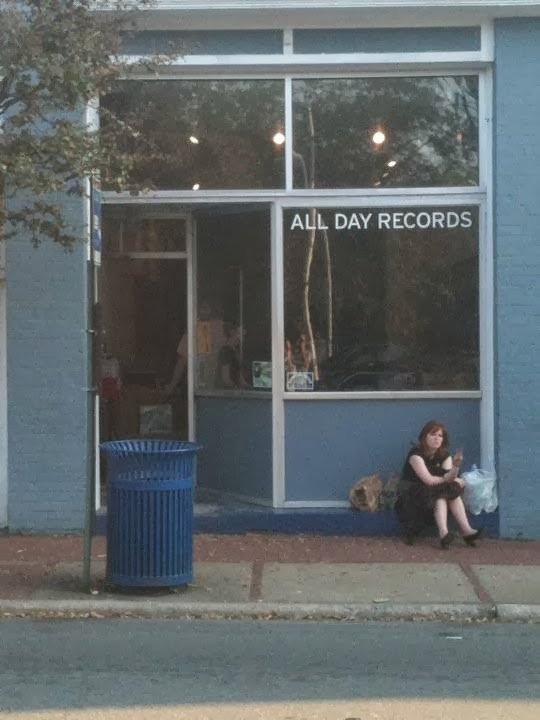
All Day Records on East Main Street in Carrboro is the flagship: indie, electronic, hip-hop, folk, blues, and experimental, with a staff that matches the Triangle indie DNA.
For instruments and gear, Main Street Music of Carrboro serves players locally (not a RecordStops vinyl listing). For deeper stacks, Raleigh and Durham are a short drive.
Live Music Venues
Chapel Hill and Carrboro's venue ecosystem is compact but legendary.
Cat's Cradle is the anchor—since 1969, this institution has operated in several Chapel Hill locations before settling in Carrboro. The current ~750-cap main room and ~200-cap backroom have hosted everyone from national tours to local heroes. Plans for a larger Brewer Lane space were reported in 2024; 300 E Main St in Carrboro remains the live room into 2026.
Local 506 on Franklin Street offers a more intimate ~250-cap room for indie and folk. The Cave, literally below street level in downtown Chapel Hill, squeezes ~74 people in for singer-songwriter and acoustic sets—it's been doing this since the 1960s.
The ArtsCenter in Carrboro brings folk, acoustic, and community programming. The Speakeasy and The Kraken add intimate options for local acts. For something different, Lapin Bleu and Steel String Brewery host live music in relaxed settings.
For larger productions, Carolina Performing Arts brings world-class classical, jazz, and global music to UNC's Memorial Hall and The Current venue downtown.
Every May, the Carrboro Music Festival takes over the town with free shows at venues and outdoor stages—a celebration of the local scene.
Cat's Cradle
Legendary since 1969 - Nirvana played here
300 E Main St
The legendary venue that helped build Chapel Hill's "next Seattle" reputation. Since 1969, has hosted Nirvana, Iggy Pop, Public Enemy, and John Mayer. The 750-cap main room and 200-cap backroom anchor the Triangle indie scene.
Stilllife
Electronic and experimental focus
113 E Main St
Carrboro's newest venue focusing on electronic and experimental music. A welcome addition to the scene for sounds Cat's Cradle doesn't typically book.
The Cave
Tiny 74-cap cave under Franklin Street
452 1/2 W Franklin St
Chapel Hill's smallest venue at just 74 capacity. A below-street-level cave (literally) that's hosted countless singer-songwriters and acoustic acts since the 1960s.
Music History & Legends
Chapel Hill's music history runs from Piedmont Blues to indie rock dominance. Elizabeth Cotten, who wrote "Freight Train" as a teenager in the early 1900s, lived in Chapel Hill for decades after being rediscovered at age 60. Floyd Council, a pioneering Piedmont Blues guitarist, established the region's blues tradition.
The scene began heating up in the 1970s when Cat's Cradle became a hub for bands like Red Clay Ramblers and Arrogance. Mike Cross, Don Dixon, and Doug Clark & the Hot Nuts built followings in the college town atmosphere.
By the 1980s, bands like The Connells, Flat Duo Jets, and Southern Culture on the Skids were releasing records. Then came the explosion: Superchunk, Archers of Loaf, Polvo, Dillon Fence, The Veldt, and dozens more made Chapel Hill synonymous with indie rock.
Merge Records, founded in Chapel Hill in 1989, moved to Durham decades ago but remains connected to the scene that birthed it. The 2025 book A Really Strange and Wonderful Time: The Chapel Hill Music Scene 1989-1999 documents the peak years for future generations.
Neighborhoods for Music Lovers
Franklin Street is the main drag through Chapel Hill. Local 506 and The Cave are here, plus college-town bars, restaurants, and bookstores. Stilllife is downtown above Sutton's Drugstore. All walkable from the UNC campus.
Carrboro is a neighboring town (population ~21,000) with its own distinct identity. Cat's Cradle, All Day Records, and The ArtsCenter are here. More local, less student-dominated than Franklin Street, but just as walkable.
East Main Street (Carrboro) is the creative corridor—All Day Records, food spots, and the Cat's Cradle orbit. Park once and explore on foot.
The Perfect Music Day
Morning: Start at All Day Records in Carrboro when they open. Dig through the indie and experimental sections—they know the local scene.
Afternoon: Walk Franklin Street in Chapel Hill. Browse the bookstores, grab lunch, check the Local 506 and Cave calendars. Visit the UNC campus if you want to feel the college-town energy.
Evening: Catch a show at Cat's Cradle—check their calendar in advance as good shows sell out. For something smaller, Local 506 or The Cave likely have someone playing.
Pro tip: Cat's Cradle is in Carrboro, not Chapel Hill proper—plan your evening around that location.
Your Route
Practical Info
Best time to visit: School year (September-May) when student energy is highest. Summer is quieter but shows still happen.
Getting around: Downtown Chapel Hill and Carrboro are walkable from each other. Parking can be tight on busy nights—arrive early for shows.
Where to stay: The Carolina Inn on campus is the classic choice. Carrboro has smaller options closer to Cat's Cradle.
Local tip: The Cave is easy to miss—look for the stairs going down below street level. It's a Chapel Hill institution worth experiencing even if you don't know who's playing.